End-to-End Fire Protection – Learn About All Vital Extinguisher Types
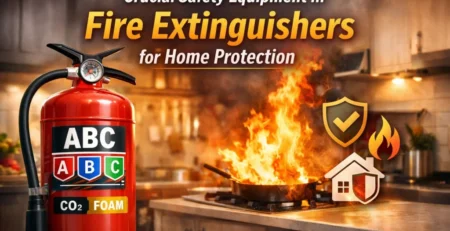
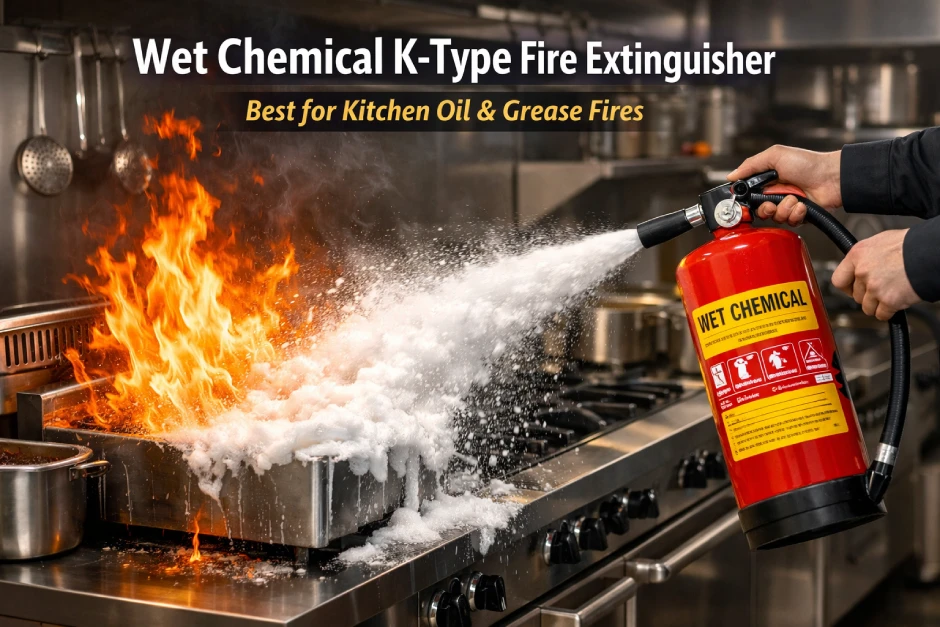
Safety from the fire threat is not something to be taken lightly. However, people tend to pay insufficient attention to the presence of fire extinguishers in their homes or offices, since these extinguishers appear to be ordinary safety objects. But it takes an urgent situation for one to realize the significance of fire extinguishers. It should be noted that each particular fire requires its own type of extinguisher. For instance, wet chemical K-type fire extinguishers help extinguish oil or grease fires, which are common in kitchens.
If you assume that a particular extinguisher is all you need for fighting a fire, you fall into a misconception. Knowing the advantages and disadvantages of particular models allows one to be more confident about fire safety. Furthermore, in this blog post, we will provide a basic overview of fire extinguishers and their main types.
What is a Fire Extinguisher?
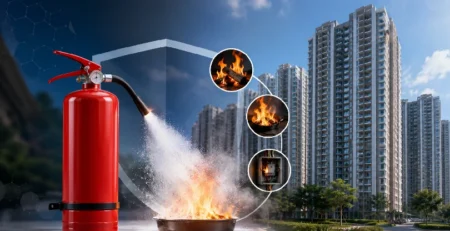
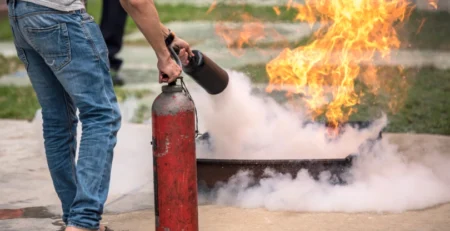
A fire extinguisher is a handheld, portable active fire protection device designed to control or extinguish small, contained fires in emergency situations. It consists of a cylindrical pressure vessel containing extinguishing agents, such as water, wet chemical K-type, foam, dry chemical powder, or carbon dioxide, which are released through a nozzle to stop flames, cool burning material, or disrupt chemical reactions. Moreover, a fire extinguisher is primarily used during the incipient stage of a fire. They are vital for preventing small sparks from spreading. To use one, the PASS (Pull, Aim, Squeeze, Sweep) method is commonly recommended.
Key Features of a Fire Extinguisher
- Pressure Gauge: It shows whether the extinguisher is completely charged or full and can be used (green zone of the needle).
- Safety Pin: It stops the extinguisher from being accidentally discharged.
- Operating Handle/Control Knob: It is used to trigger the release of pressure and the discharge of the agent.
- Body/Cylinder: A strong metal cylinder containing the pressurized extinguishing agent.
- Nozzle/Hose: It aims the extinguishing agent at the base of the fire.
What are the Fundamental Types of Fire Extinguishers?
This section is set aside to give information on some basic kinds of fire extinguishers one ought to be aware of before choosing from the best wet chemical K-type extinguisher company.
1. Wet Chemical K-Type
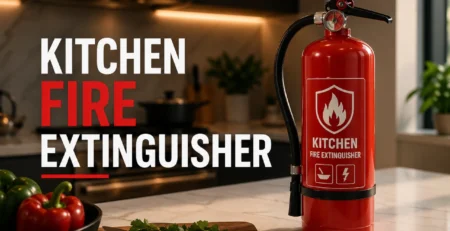
The wet chemical K-type fire extinguisher refers to an extinguisher used to fight cooking oil, grease, and fat fires (class K). Unlike dry- or water-based chemical extinguishers, which can cause unpredictable fire splashback, this extinguisher uses a potassium-based solution applied as a fine mist. Therefore, when a wet chemical K-type fire extinguisher contacts burning oil, it initiates a chemical reaction that is known as saponification, converting the hot oil into a non-combustible, soapy foam. However, this entire process smothers the flame and cools the intense heat, effectively preventing re-ignition. It is vital for restaurants and cafeterias, typically featuring a silver cylinder with a yellow label.
Key features:
- It is released as a spray, avoiding the risk of splattering hot grease when using a jet spray.
- The foam creates a layer that acts as a vapor barrier, preventing the fire from reigniting.
2. CO2 Fire Extinguisher
The manufacturer of CO2 type fire extinguishers ensures the following characteristics make it a unique fire protection equipment meant for Class B and electric fires, where the release of CO2 pressurized gas occurs. The CO2 fire extinguisher works effectively because it removes oxygen from around the fire, thus depriving it of the oxygen needed for burning, while at the same time cooling it to extinguish the fire. It is easily recognized by its black label and distinctive hard-discharge horn. These fire extinguishers are ideal for safeguarding sensitive electrical equipment, offices, and laboratories. Likewise, they are not appropriate for solid combustible materials (Class A) or cooking fires.
Key features:
- CO2 gas is a very clean, non-corrosive substance that leaves no residue on anything it touches, making it ideal for use around electronics or expensive machinery.
- CO2 fire extinguishers can be recognized by their hard horn at the end of the hose, which helps control the release of the cold cloud and prevents the hose from freezing.
3. Automatic Dry Powder Fire Extinguisher
An automatic dry powder fire extinguisher is referred to as an automatic, local, or ceiling-mounted extinguisher that automatically puts out the fires without any human involvement. The extinguisher holds dry chemical powder and is filled with nitrogen gas. Moreover, when fire breaks out, the heat causes the bulb to break (typically at 60°C), releasing the powder over a wide area, extinguishing the flames, and breaking the chemical reaction. Furthermore, these extinguishers are ideal for unsupervised, high-risk areas, such as engine bays, storage areas, and server rooms. An automatic dry powder fire extinguisher provides 24/7 protection against Class A, B, and C fires, as well as electrical fires.
Key features:
- They continually check for potential fire hazards and are very effective in closed spaces that are highly susceptible to them, such as boiler rooms and engine rooms, where no one is present.
- Fire extinguishers used in class A, B, and C fires extinguish the fires by blanketing them and blocking the reactions leading to the occurrence of fire.
4. Modular Automatic Fire Extinguisher
A modular automatic fire extinguisher is a ceiling-mounted, self-activating fire suppression unit manufactured to detect and extinguish fires without human intervention. Unlike manual extinguishers, a modular extinguisher uses a heat-sensitive glass bulb that bursts at a pre-set temperature (normally ranging from 68°C to 93°C), releasing extinguishing agents, such as clean agents, CO2, or ABC dry powder, directly onto the fire source. Furthermore, they are perfect for security purposes around the clock in vulnerable or unmanned locations, including server rooms, electrical switchgear, and storage facilities. They are independent of any external source of electricity and provide immediate local firefighting to reduce losses.
Key features:
- These extinguishers operate automatically and are well-suited for highly hazardous, unattended, or hard-to-reach locations such as server rooms, warehouses, or even ceiling spaces.
- They have been made in modular form and do not require any external electrical power or a piped gas supply to function.
Concluding Here!
Ignoring the importance of fire safety can be costly, while choosing the appropriate fire extinguisher will help protect you. We at Fire Extinguishers India offer a wide variety of fire solutions, including wet chemical K-type fire extinguishers, CO2 extinguishers, and automatic fire protection systems. Whether you want to install a fire safety system at an industrial site, a place of business, or a dining spot, we are here to help you. Protect your premises by opting for us through timely inspection and proper training. Better to be safe than sorry, and that’s the reason why you should opt for us in fire safety.
Frequently Asked Questions
Ans: The best practice for inspecting would be once every 6 months or once a year. The refill is recommended when the wet chemical K-type or any other type of fire extinguisher has been used or when the pressure gauge shows insufficient pressure.
Ans: When it comes to using the fire extinguisher in a fire event, ensure to follow the PASS method.
- Pull (pull out the pin)
- Aim (aim at the base of the fire)
- Squeeze (squeeze the handle)
- Sweep (sweep from side to side)
It is a simple process that anyone can learn quickly.
Ans: The automatic fire extinguisher activates itself when the required temperature level is exceeded. It is helpful in places without a constant human presence, such as server rooms, warehouses, or engine rooms.
Ans: A fire extinguisher should be installed where it is easily accessible in case of an emergency. The mounting height should be right, and it should also come with appropriate signage. People should also get trained on how to use it during a panic situation.