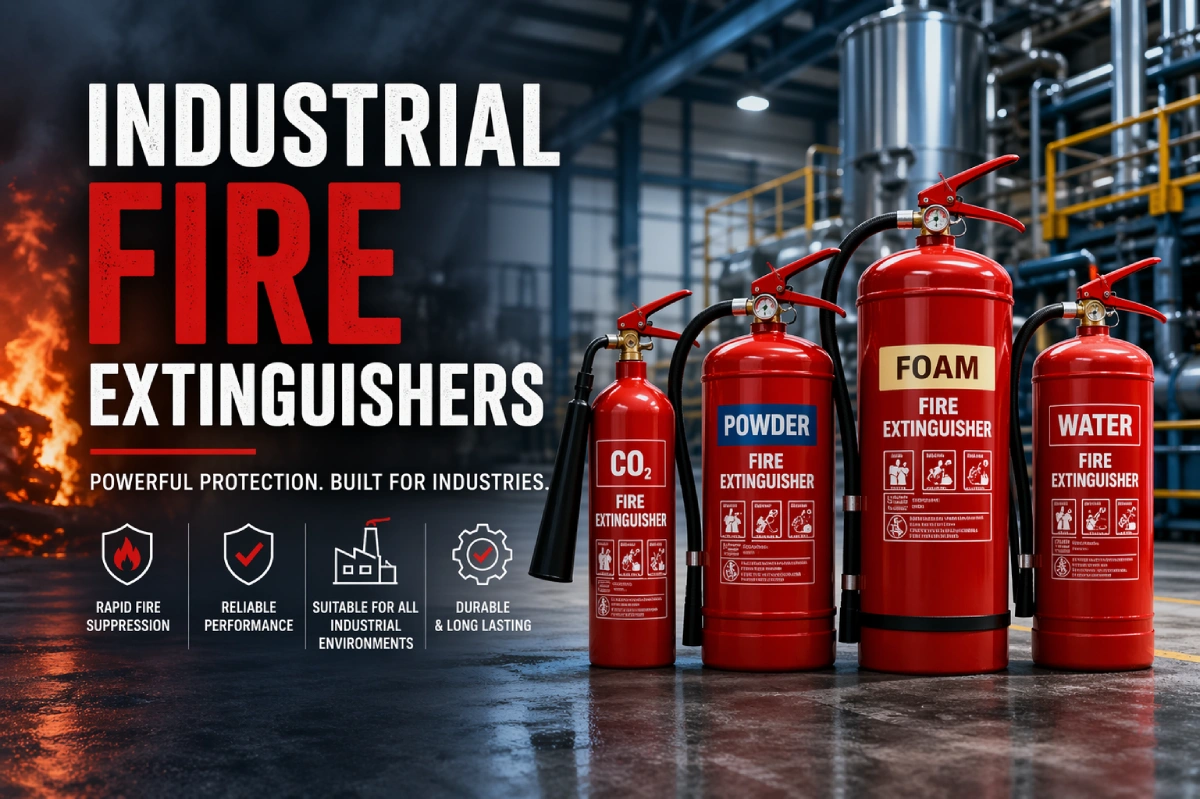
Industrial Fire Safety Systems in India- Key Guidelines You Must Know
Ensuring the safety of industries in terms of fire is not just a need. It becomes necessary for industries to comply with safety standards to protect themselves from fire hazards. The growth of the industrial sector in India has increased the risk of fire. This calls for the application of proper safety procedures. In the contemporary environment, industrial fire extinguishers play a major role in controlling fires at an early stage.
However, installing these tools alone is not enough. To ensure fire safety, it is necessary to plan ahead, follow appropriate guidelines, and maintain the systems regularly. Most industries tend to ignore the simplest of safety guidelines without even realizing their importance. In this comprehensive guide, we will discuss the key guidelines for industrial fire safety systems in India, technical configurations, and more. Let’s get started!
What is an Industrial Fire Safety System?
A fire protection system for industries is an interconnected structure of both passive and active techniques that will help detect, prevent, suppress, and put out any fire hazards in industrial premises, such as power stations, manufacturing facilities, and warehouses, through the use of high-quality industrial fire extinguishers. Fire protection systems exceed the usual fire sprinkler systems by providing customized security against fire hazards such as dust, electrical equipment, or flammable chemicals. Some of the major features of a fire protection system include automatic detection systems (temperature or smoke), warning alarms, and various forms of suppression, such as dry powder, water, gases, or foam.
How Industrial Fire Extinguishers Enhance the Safety of Your Industrial Surroundings?
Industrial Fire Extinguishers improve safety by enabling immediate, on-site suppression of small fires, preventing them from escalating into major and sudden fire emergencies. Moreover, let’s discuss some essential ways a fire extinguisher enhances the end-to-end safety of your industrial surroundings:
- The use of fire extinguishers offers an easy and quick method of suppressing fire that can be used by trained employees before it spreads.
- There are special fire dangers associated with industrial environments, such as gas, electronic equipment, or flammable materials, calling for specialized extinguishers (such as Form/Dry Chemical for chemicals or CO2 for electronics).
- Fire extinguishers help organizations mitigate any potential damage, loss of equipment, or disruption to business processes by fighting fires at their initial stages.
- Installing proper industrial fire extinguishers becomes essential, both legally under OSHA rules and locally, to avoid any liability.
- Maintenance and regular inspections are crucial.
Technical Configuration of a Standard Industrial Fire Extinguisher
| Parameter | Technical Specification |
|---|---|
| Extinguisher Type | Dry Chemical Powder (ABC Type) |
| Capacity | 9 kg |
| Fire Rating | 34A / 233B / C |
| Extinguishing Agent | Mono Ammonium Phosphate Powder |
| Cylinder Material | Mild Steel, Seamless / Welded |
| Working Pressure | 15 bar |
| Test Pressure | 35 bar |
| Propellant Gas | Nitrogen |
| Discharge Time | 15 – 20 seconds |
| Discharge Range | 4 – 6 meters |
| Operating Temperature | -20°C to +60°C |
| Valve Material | Brass / Aluminum Alloy |
| Hose Length | 500 – 700 mm |
| Mounting Type | Wall Mounted / Stand Mounted |
| Activation Method | Squeeze Grip with Safety Pin |
| Cylinder Coating | Epoxy Polyester Powder Coated (Red RAL 3000) |
| Weight (Filled) | Approx. 13 – 15 kg |
| Refilling Standard | As per ISO 7165 / IS 15683 |
| Certification | CE / BIS Certified |
| Application Class | Class A, B, C Fires |
| Accessories | Hose, Nozzle, Wall Bracket, Pressure Gauge |
Key Guidelines for Industrial Fire Safety Systems in India
Here are some key guidelines for fire safety systems that every industry owner should know. Let’s check them out one by one:
1. Complete Fire Risk Assessment and Planning
The foundation of industrial fire safety is a written fire prevention plan (FPP) tailored to the facility’s risks. Furthermore, this process involves a meticulous assessment of potential ignition sources, including hot work, chemical reactions, welding, and electrical equipment. The plan must identify the storage of hazardous materials, the personnel responsible, and the combustible waste used for equipment maintenance. Nevertheless, this assessment should be updated annually or whenever a new material or process is introduced.
2. Engineered Fire Detection and Alarm Systems
Prior detection is imperative to preventing small incidents from becoming catastrophic. Industrial facilities ensure the installation of an advanced, high-quality fire extinguisher and fire detection system, including smoke, flame, and heat detectors, while covering every corner of the building. Additionally, these fire alarm systems must be linked to a central monitoring station and equipped with an audible, distinctive, and visual alarm system that can be heard above the ambient noise of machinery. Thus, it helps ensure everyone knows when to evacuate the space in a sudden fire emergency.
3. Tailored Fire Suppression Systems
Active suppression systems are designed to address the specific industry risks, such as advanced water mist or CO2 for electrical rooms, foam systems for larger storage areas, and wet chemical systems for kitchens. Sprinkler industrial fire extinguishers must be properly designed, installed, and maintained to meet NFPA codes. High-density storage spaces might need in-rack sprinklers to safeguard against vertical fire spread.
4. Strict Maintenance and Inspection Protocols
Installed systems are mostly useless if they fail during an emergency. All firefighting equipment, including a fire extinguisher, detection system, sprinkler, and hydrant, must be regularly inspected, maintained, and tested while adhering to the regulatory standards. Furthermore, defective equipment must be immediately replaced. That is why integrated testing is vital to ensure that alarms, emergency power systems, and sprinklers function in coordination.
5. Clear Evacuation Routes and Emergency Exit Procedures
Safe exit from the industrial building is paramount. Exit gates must remain unobstructed at all times, with no materials or equipment blocking the way while moving from the building to outside pathways. All exits must be clearly marked with illuminated signs and lead to a designated, safe, outdoor assembly point. Exit doors must be designed for instant, manual operation from the inside without keys or special tools, such as panic bars.
6. Employee Training, Education, and Drills
A well-trained workforce is the first line of defense. It is imperative to provide regular training on using industrial fire extinguishers to educate employees about fire risks in their workspace, emergency response procedures, and proper handling of flammable materials in such situations. Routine, practiced fire drills and evacuations are necessary to familiarize employees with the fastest, safest escape routes and to ensure that, in a real fire crisis, they act instantly.
7. Active Hazard Control and Prevention
Preventing the accumulation of flammable materials is a vital part of everyday discipline that dramatically reduces the risk of fire in sudden situations. Thus, it includes proper handling and storage of flammable materials, keeping machinery free of lint and dust, and promptly cleaning up spills. Electrical systems should be routinely inspected for overloaded circuits or wiring faults. Ensuring that “hot work”, such as welding or cutting, is performed in controlled areas where industrial fire extinguishers are installed properly and also include proper permits, is vital for reducing ignition risks.
Purchase the Top-Quality Industrial Fire Extinguisher from the Best Manufacturer!
The issue of fire safety in industries is not only a matter of compliance with basic requirements, but it is much more than that. It is a strategy that relies on the importance of the use of industrial fire extinguishers for industries that play a role in ensuring maximum security.
At Fire Extinguishers India, we offer more than just fire extinguishing devices. We offer total security. We guarantee your security by offering our professional knowledge and services. We ensure that every fire extinguisher is manufactured with the highest-quality materials and chemical properties, helping extinguish the fire before it becomes uncontrollable. If you want to secure your industrial premises, get in touch with Fire Extinguishers India right away!
Frequently Asked Questions
Ans: Selecting the right kind of extinguisher is significant. Therefore, the measures will depend on the risk factors linked with the particular industry:
- Use CO2 extinguishers for firefighting in case of electrical fires.
- Foam and dry-chemical extinguishers are used for firefighting involving chemicals and flammable liquids.
- ABC fire extinguishers should be used for general firefighting (e.g., wooden and paper).
- Multi-purpose industrial fire extinguishers are recommended for firefighting of various classes of fire.
Ans: When it comes to fire safety systems, maintenance should be performed regularly. Here are ways to increase the lifespan of the fire extinguisher:
- Monthly inspections of fire extinguishers are advised.
- Annual servicing and refill should be conducted strictly in accordance with the established standards.
- Alarm and detector systems should be tested regularly.
- Faulty equipment should be replaced without delay.
Ans: Risk assessment is a complex process aimed at identifying fire hazards in industrial facilities (e.g., faulty electrical wiring, chemicals, etc.). The process helps create a thorough Fire Prevention Plan. Thus, industrial facilities can identify their weak spots and take preventative measures in advance.
Ans: It is imperative to be able to evacuate safely in case of a fire. For safe evacuation, it is recommended to:
- Keep exit routes clear of any objects.
- Have illuminated signs pointing to exits.
- Ensure the easy opening of emergency exit doors.
- Clearly mark the place where all personnel will gather after exiting.
Ans: Training is the most important component here, as any safety system is useless if the personnel do not know how to use it. Proper training ensures that employees will be able to use fire extinguishers and evacuate effectively from a burning facility. Drill helps prepare them mentally for the real situation.