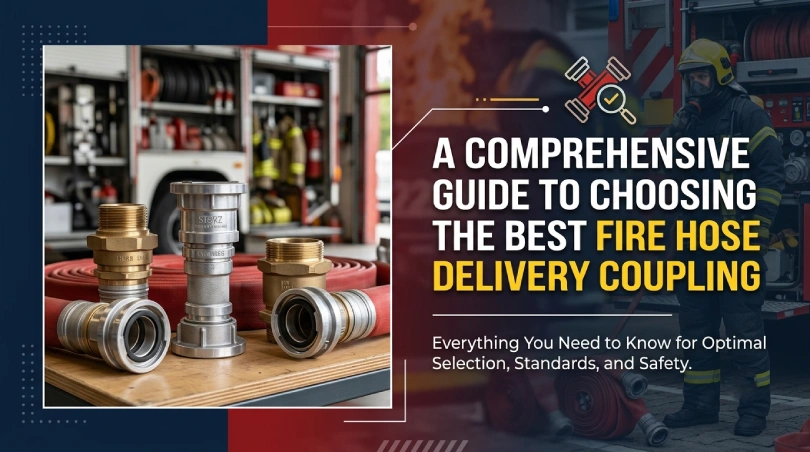
A Comprehensive Guide to Choosing the Best Fire Hose Delivery Coupling
As we all understand, a fire hose delivery coupling is the backbone of firefighting operations. Any kind of fire hose will work only when it comes with the right kind of fire hose coupling. This is the reason why a fire hose is ideal for firefighting efforts. This is an important item that helps carry water or other extinguishing agents to the fire so it can be put out before it becomes more serious. In addition, choosing the correct item is not a question of observation but is an important decision.
Additionally, in this comprehensive blog post, we will discuss fundamental factors that you must consider when choosing the best fire hose delivery coupling, as one wrong decision can lead to loss of money, time, safety, and create utmost frustration. So, ensure you get exactly what you need for your hose connection by reading the checklist below.
What is a Fire Hose Delivery Coupling?
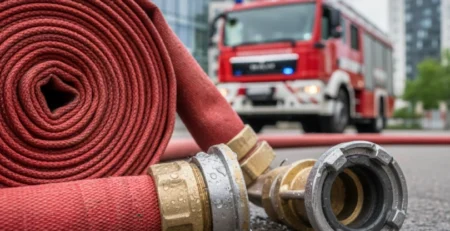
A fire hose delivery coupling is a small yet vital part of the firefighting system. It is a sturdy metal fitting installed at the ends of the fire hose to connect the hose to hydrants, pumps, nozzles, or additional hose segments. It serves to create a tight, reliable connection that helps prevent water leakage and provides a constant flow during emergency operations. Fire hose couplings can be found in various types to match the specific needs of firefighting.
Key Features of Fire Hose Delivery Coupling
- It enables rotation of the female portion of the joint. This ensures that hoses can be joined without the whole line being twisted.
- It has extended pins or wings. They assist firefighters in gripping and securing connections with hands or wrenches.
- It has a unique blunt start threading. There is a marking that guides the thread alignment to prevent cross-threading in darkness and smoke.
- It has an internal rubber or synthetic gasket. Pressure exerted by water presses the seal to ensure there is no leakage.
- It is made of strong and lightweight metals such as aluminum alloys, brass, or gunmetal.
Significant Types of Fire Hose Delivery Couplings
- Camlock Coupling: Camlock couplings are useful in the connection of fire hoses and other firefighting equipment because of their ability to establish connections quickly. They provide a reliable connection because they have a quick connection system whereby users are able to easily connect and disconnect the fittings without using any tool. It will save the time spent searching for tools to connect hoses in an emergency situation.
- Storz Coupling: Storz couplings are symmetrical, shut-off-free fittings used in firefighting. They have lugs that are designed to fit in the slots of another coupling. Firefighters insert and twist the two coupling halves in opposite directions to achieve a proper coupling.
- Guillemin Coupling: Like Storz couplings, Guillemin couplings are sexless fittings in the sense that two couplings having the same diameter can be interconnected. The simple nature of the Guillemin coupling makes it easy for firefighters to engage the latches and rotate the locking ring to ensure the connections are tight.
- Pin Lug Coupling: It is a good and economical coupling for firefighting purposes. They form a secure seal when the female swivel is correctly connected and screwed into the male coupling.
Technical Configuration of Fire Hose Delivery Couplings
| Parameter | Technical Configuration |
|---|---|
| Product Type | Fire Hose Delivery Coupling |
| Primary Function | Used to connect fire hoses to hydrants, pumps, valves, nozzles, or other fire hose sections |
| Common Coupling Types | Threaded, Storz, instantaneous, and quick-connect coupling types |
| Material | Made from aluminum alloy, brass, stainless steel, or other anti-corrosive material |
| Connection Type | Threaded or genderless quick-connect, as per the coupling type |
| Thread Standard | NH/NST, BSP, or other relevant national and international standards |
| Nominal Sizes | Available in common sizes like 1½”, 2″, 2½”, 3″, 4″ and others as needed |
| Working Pressure | Generally based on the hose and firefighting system’s pressure rating |
| Test Pressure | Generally above the rated working pressure and as per the relevant standard |
| Sealing Method | Rubber gasket, O-ring, or integral sealing system |
| Coupling Ends | Male and female threaded or male and female free Storz type coupling |
| Operating Temperature | Based on the material, gasket, and manufacturer specifications |
| Corrosion Resistance | Anodized, coated, or natural corrosion-resistant |
| Standards | Complies with NFPA, BS, EN, DIN, or other relevant firefighting standards |
| Applications | Hydrant system, fire truck, pump, industrial firefighting, or emergency response system applications |
| Maintenance Requirement | Routine inspection for thread damage, gasket wear, corrosion, and coupling integrity |
Factors to Consider When Choosing the Right Fire Hose Delivery Coupling
Here are some significant factors to consider when purchasing the right fire hose delivery coupling:
1. Pick a Suitable and Reliable Material
There are several materials that fire hose couplings can be made of, including aluminum, brass, and stainless steel. For instance, aluminum couplings are quite light, allowing for easier maneuvering when carrying the hoses in emergencies. In turn, brass and stainless steel ones are rather heavy but provide very good resistance to corrosion, chemicals, saltwater, and difficult conditions. It is crucial to select the appropriate material depending on the usage environment and how often it will be handled.
2. Match the Coupling with the Hose Diameter
The correct fire hose delivery coupling diameter should be chosen to match the internal waterway of the hose. There are usually different diameters of fire hoses, varying between 1.5 inches and even 4 inches. Otherwise, an improper diameter may affect the water flow rate, cause additional friction, and unnecessary stresses on the connection itself.
3. Ensure Thread Type Compatibility
Threaded couplings should comply with particular standards, like National Standard Thread (NST/NH), National Pipe Straight Hose (NPSH), etc. Storz couplings are also available with quick connection. Before selecting a suitable coupling, it is required to know the standards of local hydrants, pumps, and other firefighting units.
4. Pick a Coupling with Adequate Pressure and Sealing
It is essential to pick a reliable fire hose delivery coupling that will safely tolerate the maximum operating and surge pressures of the pumps and water supply system. Appropriate machining, good swivels, and high-quality gaskets will help avoid leaking and ensure reliable sealing during high-pressure pumping.
5. Focus on Fast and Easy Connection
During any fire emergency, every second counts. Quick-connect couplings can assist in fast connecting hose lines and in avoiding problems, like cross-threading. Additionally, lugs, handles, and swivels should be easy to operate while wearing protective gloves.
6. Opt for Lightweight and Practical Design
A heavy fire hose delivery coupling will lead to increased difficulty in maneuvering the hose, especially during long firefighting activities. Therefore, it is better to pick aluminum or other lightweight yet durable material, for example, a composite one.
7. Check for Safety Standards and Certifications
Select only certified products that comply with particular standards like NFPA 1963 or some other similar standard. Certified couplings are thoroughly tested for pressure, strength, and durability.
Wrapping It Up!
Choosing a fire hose delivery coupling plays a vital role in ensuring the efficiency and safety of a firefighting system. At Fire Extinguishers India, we know that all the components utilized in any emergency situation should perform in an effective way. All the firefighting equipment we offer is carefully chosen in order to ensure safety, efficiency, and durability, which will allow you and your company to establish a reliable fire safety system. With our assistance, you will be able to select a proper coupling in terms of its size, connection, pressure, and other criteria.
Whether it is an update of your current system or setting up a new one, reliable components may make a considerable difference in an emergency. Contact us now to find out suitable fire hose delivery couplings.
Frequently Asked Questions
A fire hose delivery coupling is attached to hydrants, pumps, valves, nozzles, or another hose. This coupling ensures a dependable water supply and prevents leaks when firefighting.
Coupling size should correspond with the diameter of the fire hose and the connecting point of the fire equipment. Take a look at the specifications of your hose and outlet size before buying.
The choice of material will depend on the working environment:
- Aluminum is lighter and easier to handle in emergencies.
- Brass is durable and resistant to corrosion.
- Stainless steel is used in aggressive and corrosive environments.
It is always better. With Storz couplings, one can quickly make a genderless connection. Threaded couplings provide a secure connection if matching threads are installed.