
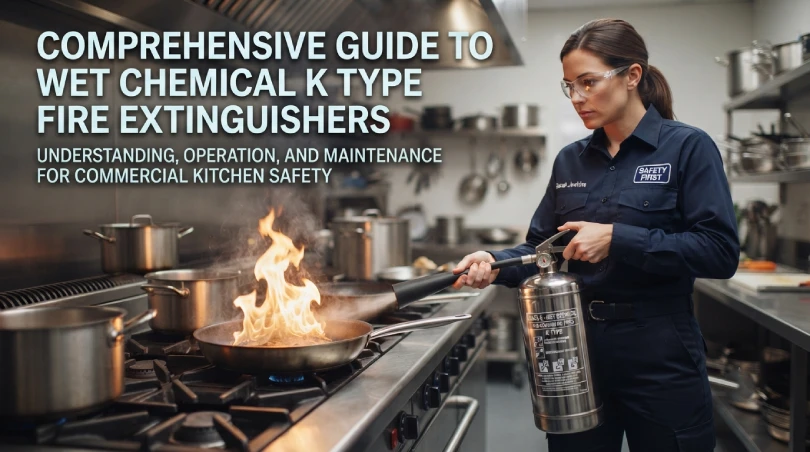
Comprehensive Guide to Wet Chemical K Type Fire Extinguishers
Wet chemical fire extinguishers use a potassium-based solution and are used in commercial kitchens to put out cooking oil and grease fires. Sodium solutions in the wet chemical K type fire extinguishers turn oil, fat, and other sources of K-type fire into a non-flammable, soapy substance. This prevents the fire from spreading and also reduces sizzling and spattering of extremely hot oil around. Cooking oil and animal fat fires are extremely dangerous and must be handled carefully, as the temperature can get extremely high. Thus, it is best to use specialized fire extinguishers for such cases to minimize damage and ensure a quick response.
We will cover everything you need to know about wet chemical fire extinguishers. It will help you learn critical aspects of these specialized fire extinguishers and use them effectively.
Working Mechanism of a Wet Chemical K-Type Fire Extinguisher
Wet chemical fire extinguishers are specialized equipment that are designed to deal with K-type fires. In order to suppress highly violent oil fires, the wet chemical K type extinguishers discharge a mist of potassium solution. Unlike standard fire extinguishers, the extinguishing media from wet chemical ones is discharged comparatively slowly. This is because oil or K-type fire sources get extremely hot, and high-pressure fire extinguishers risk the splashing and spreading of the fire.
Once the extinguishing media comes in contact with the fire, it reacts with the oil, animal fat, or any other similar fire source and creates a soapy substance. This non-flammable substance creates a soapy, foam-like layer on top of the fire source. The wet fire extinguisher has water, which evaporates rapidly to reduce the overall temperature of the fire. This dual action of wet chemical fire extinguishers rapidly controls fire and prevents it from spreading.
When To Use and When To Avoid Wet Chemical Fire Extinguishers
While wet chemical fire extinguishers are extremely helpful for oil fires, using them for other cases is counterproductive. Thus, you need to understand when to use and when to avoid these fire extinguishers to ensure optimal fire protection.
When to Use
- Cooking oil and fat fires: These fires are highly temperamental, with extremely high temperatures and a high risk of spreading to the surroundings.
- Deep-fryer fires: Commercial and industrial deep-fryer fires must be surrounded by wet chemical fire extinguishers, as they are at a significant risk of K-type fires.
- Commercial kitchens: These fire extinguishers are primarily used in kitchens where large quantities of cooking oil are used.
When to Avoid
- Live electrical equipment: The water content in the wet chemical K type fire extinguisher is extremely dangerous for electrical fires, and you must avoid using it unless the extinguisher is specifically rated for electrical fires.
- Flammable liquids: The benefits of wet chemical fire extinguishers are limited to cooking oil, and they are not intended for petrol, diesel, solvents, or similar liquids.
- Gas fires: Not the appropriate choice for fires involving flammable gases.
- Metal fires: Do not use them for combustible metal fires.
- Other fire classes: Use only when the extinguisher’s label confirms the relevant fire rating.
Complete Fire Protection Solutions by Fire Extinguishers India
K-type fires are highly dangerous because oils and fats burn at significantly high temperatures ranging from 107°C to 271°C, and even higher in some cases. Thus, dealing with them requires special fire extinguishers to put out fires safely and keep the damage to a minimum. Only certified fire extinguisher manufacturers can provide you with the right equipment. So, if you want high-quality and reliable fire protection solutions, contact Fire Extinguishers India. Each fire extinguishing product manufactured in our certified facilities undergoes strict quality checks to ensure optimal protection and long-term reliability.
In addition to the wet chemical K type fire extinguisher, our extensive product catalog offers you multiple other fire safety equipment. Or, if you need custom fire safety solutions, we can provide them as well. Our capable engineering team will evaluate your site and design solutions to address your particular fire safety requirements.
The best way to reach our experts is by scheduling a consultation. Contact our customer support to learn more details.
Concluding Note
Wet chemical K-type fire extinguishers are a key part of fire protection in commercial kitchens and other areas that extensively use cooking oil and animal fats at high temperatures. Their specialized extinguishing agent helps suppress high-temperature cooking oil fires while forming a protective layer that helps prevent re-ignition. This makes them particularly suitable for deep fryers, cooking ranges, grills, and similar kitchen equipment.
However, choosing the right fire extinguisher is just as important as having one readily available. Wet chemical extinguishers should only be used for fire types and applications specified on their certification and product label. Using an unsuitable extinguisher can increase the risk of injury, property damage, or fire spread. If you are not sure which fire extinguisher would be ideal for your residential, commercial, and industrial space, let Fire Extinguishers India experts help you.
FAQs
A wet chemical K-type fire extinguisher is designed primarily for fires involving cooking oils and fats. It discharges a specialized wet chemical agent that helps cool the burning material and suppress the fire.
They are commonly used in commercial kitchens, restaurants, hotels, cafeterias, catering facilities, and other areas where cooking oils and fats are used.
Common types include water, foam, dry powder, carbon dioxide (CO₂), and wet chemical extinguishers, with each designed for particular fire classes.
Fire extinguishers should be inspected and maintained according to applicable local regulations, manufacturer instructions, and the requirements for the specific installation.
Choose an extinguisher based on the types of fire hazards present, the applicable fire classification, the required certification, and the manufacturer’s recommendations.