
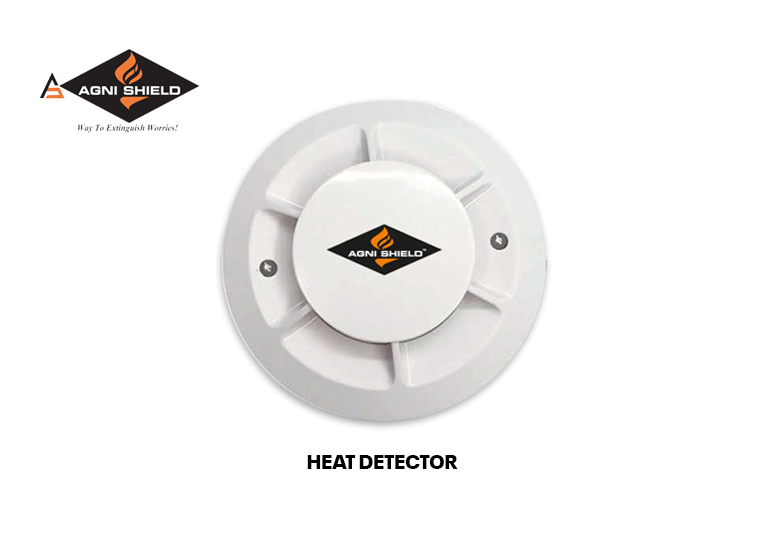
Heat Detector
Product Specification
- Response Time: 3–15 Seconds
- Operating Voltage: 9V to 33V DC
- Operating Temperature:-10°C to +55°C
Product Description
A Heat Detector is suitable for detecting heat that may lead to an uncontrolled fire, whether in commercial or residential areas. Furthermore, this smoke and heat detector features a high-quality, proven thermistor-based heat-detection sensor. Likewise, the Thermistor has been designed with a smaller thermal mass, delivering a rapid alarm response when the trigger temperature range of -10°C to +55°C is reached. It is one of the best products for detecting heat buildup from extensive flaming fires. Likewise, it can distinguish between steam and smoke, drastically reducing false alarms.
Application Areas of the Heat Detector
Here, we have listed some significant application areas of an industrial heat detector that you must know before planning to purchase one:
- Kitchens (Residential or Commercial Properties)
- Boiler Rooms
- Industrial Plants
- Parking Garages
- Attics & Crawl Spaces
- Warehouses & Storage Facilities
- Electrical Rooms/Substations
- Chemical Storage Areas
- Elevator Machine Rooms
- Data Centers
- Ceiling Voids & False Ceilings
- Cleaning Rooms or Laboratories
- Garment Factories and Textile
- Refineries & Petrochemical Facilities
- Commercial Kitchens in Hotels/Restaurants
- Engine Compartments (Marine/Vehicles)
- Tunnels and Underground Facilities
- Hospitals (Mechanical/Utility Areas)
- Cold Storage Warehouses (Ceiling Areas)
- Mining Operations
Key Features of the Heat Detector
- It contains a rapid Thermistor heat sensor response.
- It offers fixed temperature and rate-of-rise sensing.
- It indicates false alarm resistance.
- It offers a wide operating temperature range.
- Consumers do not need to worry about its maintenance requirements.
- It offers a quick response time.
- It comes in multiple installation types.
- It gives accurate compatibility with fire alarm systems.
- It is durable and offers a sustainable design.
- It offers performance reliability and legal compliance.
Technical Specifications of Heat Detector
| Parameter | Specification |
|---|---|
| Operating Voltage | DC (10.8-30) V |
| Frequency | 3-5 Seconds |
| Heat Sensitivity | 135 F/ROR |
| Reset Voltage | Less than 1 volt |
| Reset time | Less than 1 sec. |
| Alarm indication | 2 continuous emitting red LEDs |
| Weight | 140 gram with base |
| Start up current | 100 UA |
| Alarm current (Max) | 50 mA |
| Stand by current | 40 UA |
| Dimension | Dia 100mm, ht 46mm. |
What are the Imperative Benefits Of a Heat Detector?
Safety has become a basic necessity in homes, offices, shops, and industrial spaces. A heat detector is often mentioned in fire safety discussions. These devices detect sudden increases in temperature and alert firefighters early. Let’s explain the significant benefits of an automatic heat detector for warehouse fire safety in simple, easy-to-understand terms.
1. False Alarms Are Very Few
A smoke and heat detector can sometimes be triggered by steam, smoke, or dust, especially in kitchens, bathrooms, or workshops. However, a detector detects only heat, not smoke, so false alarms are very rare. Additionally, it means that even if there is a slight smoke in your kitchen while cooking, the detectors will not sound an unnecessary alarm. It is a practical and stress-free option.
2. Sensitive to Real Fire Provides Early Warning
An industrial heat detector detects a rapid temperature rise. Furthermore, when a fire starts, the temperature suddenly increases. Heat sensors detect this change instantly and trigger an alarm. Moreover, it provides early warning, allowing you to take action before a fire spreads. Early notice makes a considerable difference in terms of safety.
3. Perfect for High-Risk Areas
There are some places where an industrial heat detector may not work correctly, such as:
- Garage
- Boiler room
- Kitchen
- Laundry area
- Mechanical rooms
Steam, smoke, or dust are common in these areas. Heat sensors are most reliable here because they monitor only temperature, not smoke.
4. Durable & Long-Lasting
A heat detector has a simple design and fewer moving parts. Therefore, it makes them more durable and extends their lifespan. Once installed, they can work flawlessly for years. Also, they are maintenance-friendly, meaning no extra expense or stress.
5. Stable Performance in Extreme Conditions
If you want to install a detector in an area where temperatures are usually high, such as an industrial kitchen or workshop, smoke detectors are often prone to failure. On the other hand, the best heat detector for industrial use performs stably even under extreme temperature conditions. They can accurately detect fires even in high-heat environments.
What are the Concerning Drawbacks Of a Heat Detector?
Here, we have mentioned the vital cons of a heat detector that every individual should know while buying for their applicable areas:
1. Slow Response Time
The most significant disadvantage of an automatic heat alarm is its slow response. They only trigger when the temperature reaches a specific threshold. If a fire is spreading slowly or there is a lot of smoke but little heat, these detectors give a delayed alarm. Compared to smoke detectors, they provide a much later warning, which can be risky in emergencies.
2. It cannot Detect Smoke
As the name suggests, an industrial heat detector detects heat, not smoke. However, if there is only smoke and no heat in the initial stages of a fire, the detector will not respond. Furthermore, it is a problem in areas where smoldering fires (slow-burning) are common. Smoke detectors are more effective in these cases.
3. It is not Useful in Sensitive Areas
In some places where temperatures are naturally high, such as:
- Kitchen
- Boiler room
- Factory floor
- Industrial machinery area
The best heat detector for industrial use can give false alarms or trigger unnecessarily. Therefore, installing them everywhere is not ideal.
4. They Don’t Provide an Early Warning System
An automatic heat detector for warehouse fire safety is a reactive device, not a proactive one. They only sound an alarm when a fire has already begun to spread. Their nature prevents the benefits of early detection. If you want an early warning, smoke detectors are a better option.
5. Limited Coverage
An automatic heat alarm has a limited coverage area. Usually, a single heat detector covers only a specific location. Nevertheless, it means that in large areas:
- More detectors are needed
- Installation costs increase
- Maintenance is also more expensive
They are not as effective for large halls, warehouses, or open spaces.
Factors to Consider When Choosing a Heat Detector
When it comes to purchasing the best heat detector for your space, several factors you should consider to safeguard:
1. Sensitivity Levels
Ensure the heat detector’s sensitivity level is evaluated. Thus, it refers to its ability to detect and respond to temperature changes. Likewise, when it comes to a smoke and heat detector, ensure the sensitivity level aligns with the environment’s requirements. Furthermore, some settings might require more reliable detectors to detect more minor temperature changes, while others might need lower sensitivity to avoid false alarms.
2. Application Specific Needs
While you plan to purchase an automatic heat alarm, make sure to consider the environment and application where the detector will be installed. Multiple settings of a heat detector can result in different temperature ranges, dust or corrosive environments, and humidity levels. Additionally, choose an industrial heat detector suitable for the particular environmental conditions.
3. Installation and Maintenance Considerations
Assess ease of installation, maintenance needs, and preferences. Furthermore, consider factors such as mounting options, compatible mounting brackets, and wiring alternatives (wireless or wired). Also, do not forget to follow the recommended maintenance procedures, such as calibration and testing, to ensure the heat detector is adequately maintained.
4. Compliance With Relevant Safety Standards
Ensure the heat detector complies with applicable safety regulations and standards. However, it ensures the industrial heat detector has been tested and meets the needs for proper function and safety. Additionally, look for approvals or certifications from reliable organizations.
Helpful Maintenance and Inspection Tips for a Heat Detector
If you want to ensure that your heat detector offers durability, longevity, and sustainability, make sure to follow the necessary maintenance and inspection tips:
- As a preventive measure before performing any inspection, it is wise to switch off the power supply. It’s an easy measure, but it protects you.
- To clean dust off an automatic heat alarm, lightly brush your detector with a soft, dry cloth. You should also use water or cleansing agents.
- Every month, make it a habit to visually check your detector for indications of corrosion, dirt accumulation, or damage.
- To keep the detector responsive, push the test button monthly, if it is present.
- Check that the LED light is working correctly. Accordingly, it should flash when in standby and become steady when the alarm is activated.
- Make sure nothing blocks the air to the heat detector, like furniture, decorative items, or items on the ceiling.
- Cobwebs or bugs can affect the performance of the device, so watch out for that.
- Never test the system with open flames. Instead, use a heat source (safely and naturally) as instructed by the manufacturer.
- Detectors tend to lose sensitivity with time, so even if they appear to be functioning fine, replace the unit if it is older than ten years.
- Keeping a record of your checks makes it easier to comply with audits and monitor problems.
- Check the smoke and heat detector mounting once more. If it does not feel secure or stable, though, retighten it immediately.
- Check that the control unit is receiving the signal if your detector is hardwired into a fire panel.
- Try resetting the system and checking for any outstanding problems or error messages after every check.
- You may need to clean and inspect your detector more often if it’s located in a kitchen or a dusty area.
- Finally, even if all seems well, have a professional do a check once a year instead of believing it will function forever.