
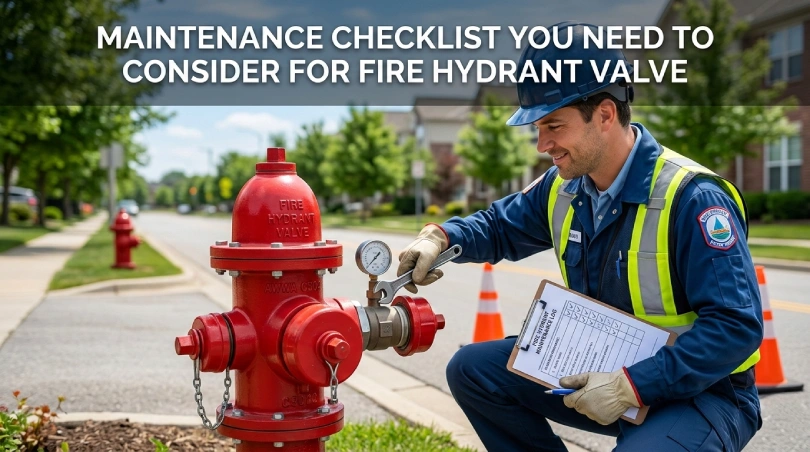
Maintenance Checklist You Need to Consider for Fire Hydrant Valve
In fire situations, the fire hydrant valve is a crucial tool widely used across sectors such as commercial spaces, buildings, factories, and industrial areas. It is a vital responsibility of every property owner to ensure the property’s security and preparedness in the event of a fire. Thus, keeping fire hydrants in working shape is imperative for their functionality during uninvited emergencies.
However, having a hydrant valve is not enough. Proper maintenance complies with legal requirements and ensures the hydrant valve’s functionality when it is most needed. In this comprehensive guide, we will discuss key ways to maintain fire valves to enhance their durability, sustainability, and versatility. Let’s get started!
What is a Fire Hydrant Valve?
A fire hydrant valve is also known as a landing valve. It is a high-pressure manual stop valve installed in a fire protection system to control or regulate the water flow. Furthermore, it acts as the connection point where firefighters connect their hoses to access a city’s water main or a building’s water supply during a fire emergency. To resist harsh environments and high pressure, these fire valves are usually manufactured from corrosion-resistant material, such as Gun Metal, Cash Iron, or Stainless Steel.
Technical Configuration of Fire Hydrant Valve
| Parameter | Technical Specification |
|---|---|
| Type | Landing Valve / Fire Hydrant Valve |
| Standard | IS 5290 / BS 5041 / UL / FM (depending on requirement) |
| Size | 63 mm (2.5 inch) inlet & outlet |
| Material of Body | Gunmetal / Bronze / Cast Iron |
| Working Pressure | 7–16 kg/cm² (typical) |
| Test Pressure | Up to 21 kg/cm² |
| Inlet Connection | Flanged / Threaded |
| Outlet Connection | Male Instantaneous Coupling (63 mm) |
| Valve Operation | Screw down type with hand wheel |
| Hand Wheel Material | Cast Iron / Aluminium |
| Spindle Material | Stainless Steel |
| Seat Material | Bronze / Rubber seating |
| Finish | Red epoxy powder coated |
| Mounting Type | Wall mounted |
| Flow Direction | Straight pattern |
| Operating Temperature | 0°C – 80°C (typical for water systems) |
| Application | Fire hydrant system in buildings, industrial plants, warehouses |
Things Included in the Fire Hydrant System
Before exploring the maintenance checklist, review the major components of a fire hydrant system, such as the RRL hose, that you must know:
- Pump Sets
- Piping Network
- Hydrants/Landing Valves
- Fire Hoses & Hose Reels
- Branch Pipes & Nozzles
- Fire Brigade Connections (Booster)
- Fire Pumps and Controllers
Comprehensive Checklist to Maintain a Fire Hydrant Valve
The fire valves play an imperative role in a building’s fire safety system. Any failure of the fire valves to function properly during an emergency can create a hazardous condition. Here are some maintenance checklists that every individual should follow who has a fire hydrant valve or related items:
1. Regular Visual Inspection
The fire hydrant valve should be checked through a regular visual inspection. In this way, any rusting, leakage, or damage to the hydrant valves can be easily identified. The area surrounding the hydrant valves should also be kept clean. Dust and dirt can cause many problems when hydrant valves are operating. A regular visual inspection should be carried out at least once a month.
2. Maintenance of Proper Lubrication
The fire hydrant valves or fire hose delivery coupling consists of many moving parts. Thus, proper lubrication should be maintained. Failure to do so can cause the hydrant valves to jam. Consequently, proper lubrication should be applied to the hydrant valves. The process involves lubricating the hydrant valves. The process will help in the smooth functioning of the hydrant valves. The valves can be opened and closed smoothly. The process will also help in extending the life of the fire hydrant valves.
3. Regular Pressure Testing
The fire hydrant valves should be checked by conducting regular pressure tests. The process will help in identifying whether the water pressure is at the required level. If the water pressure is low, firefighting during an emergency with a Malaysian hose reel drum or hydrant valve may be performed improperly. Therefore, regular testing and proper reading of the gauges should be carried out. If any abnormalities are noticed in the gauges, immediate inspection and maintenance should be carried out.
4. Never Ignore Leakage Checking
It is crucial to note that although a small leak in the fire hydrant valve system may seem minor, it can become a major problem. Thus, it is necessary to thoroughly check the system, especially if you notice leakage in any part, such as a joint, connection, or valve body. If you notice water leaking, you must ensure it is corrected as soon as possible.
5. Keep the Area Around the Hydrant Valve Clear
When responding to a fire emergency, time is of the essence, and even a second counts in saving a life or preventing further damage to properties. It is significant to keep the area around the Malaysian hose reel drum or valve clean and clear of items like boxes, vehicles, and other heavy items that may be lying around, as they may cause a delay in responding to emergencies, especially for firefighters who may need access to the hydrant valve in order to put out a fire.
6. Periodically operating the Valve is also crucial
When a fire hydrant valve is not used for a long time, it may become jammed, which can cause a lot of trouble when they are needed most. Therefore, it is essential to check the hydrant valve periodically, especially by opening and closing it, to ensure it is functioning properly. Is it opening and closing smoothly? If it is not opening smoothly, you should lubricate it as soon as possible to ensure it functions properly in an emergency.
7. Scheduling a Professional Inspection is a Smart Step.
In some cases, the basic check may fail to identify all the issues. Accordingly, a thorough inspection of the fire hose delivery coupling or valve system should be performed at least once a year by a certified technician. It includes inspection of internal parts, performance under pressure, and safety compliance. It will ensure that the system is properly serviced to avoid any hidden faults and is also considered an essential part of the preventive maintenance for building management.
It’s Time to Wrap Things Up!
It is essential to follow the proper checklist to maintain the fire valve and keep it functional in an emergency. Furthermore, we hope this blog guide has provided you with useful tips for maintaining fire valves. Consistently following the above tips will ensure you have the functionality and efficient response during a fire crisis. If you are looking for a reliable fire hydrant valve manufacturer that also provides maintenance assistance, look no further than Somya Pyrotek Services Pvt. Ltd. Our maintenance guidance will help you keep your valve in good condition. If you want more details regarding the valve maintenance guidance, contact us today!
Frequently Asked Questions
A fire valve is a high-pressure valve that is an essential part of the fire safety system. The hydrant valve is used in buildings, factories, warehouses, and commercial establishments, where firemen connect a hose to the hydrant to draw water in an emergency.
Maintaining the hydrant valve is significant because it must perform perfectly during an emergency. If the hydrant valve is clogged, leaking, or does not have sufficient pressure to operate, it may take time to fight the fire.
Fire valves need to be visually inspected at least once a month. Valves help detect problems with the hydrant valve, such as rust, leakage, or damage, so they can be repaired promptly.
The hydrant valve is a device with moving parts. Without sufficient lubrication of the hydrant valve, it may not function properly or may even lock up. The hydrant valve may not open or close properly without sufficient lubrication.
The role of pressure testing is to verify that the water pressure is sufficient to fight a fire. If the water pressure is low, it may not be possible to flow water to fight the fire.