
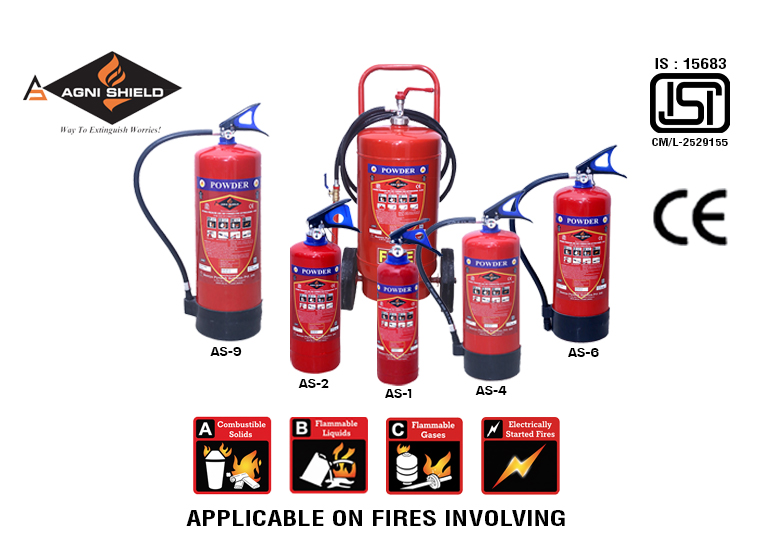
ABC Fire Extinguisher
Product Specification
- Capacity: 1 kg, 2 kg, 4 kg, 6 kg, 9 kg
- Fire Class: Class A (Solids), Class B (Liquids), Class C (Gases & Electrical)
- Type of Extinguishing Media: Dry Nitrogen or Clean Dry Air
- Operating Temperature: -20°C to +55°C
Product Description:
An ABC fire extinguisher is a versatile, multi-purpose safety device. The manufacturer of ABC fire extinguishers designed this extinguisher to combat Class A (wood or trash), Class B (Liquids), and Class C (Electrical) fires using monoammonium phosphate dry chemical powder. Furthermore, it is ideal for homes, offices, and vehicles. It works by interrupting the chemical reaction, smothering fire flames, and creating a non-conductive barrier.
Additional Details:
- Brand: Somya Pyrotek Services Pvt. Ltd.
- Model: ABC Fire Extinguisher
- Capacity: 1 kg, 2 kg, 4 kg, 6 kg, 9 kg
- Operating Temperature: -20°C to +60°C
- Discharge Time: 8–25 seconds (depends on size)
- Discharge Range: 3–6 meters
- Test Pressure: 25–30 bar (varies by standard)
- Valve Type: Brass/aluminum alloy
Key Features of ABC Fire Extinguisher
Here, we have mentioned the significant features of ABC extinguishers that every buyer should know before purchasing them from suppliers of ABC fire extinguishers:
- The ABC fire extinguisher is effective against Class A (textiles, wood, paper), Class B (flammable liquids), and Class C (gas, electrical) fires.
- A potential manufacturer of ABC fire extinguishers ensures it uses a yellow, non-conductive powder that calms flames and interrupts the chemical chain reaction.
- This precise fire extinguisher functions by melting and coating solid surfaces. Also, it creates a robust barrier that smothers the fire and prevents reignition.
- It is usually pressurized with nitrogen, enabling rapid discharge when activated to extinguish a fire.
- The ABC fire extinguisher features an in-built pressure gauge with a green zone indicating the unit is completely charged and ready to use.
- This fire extinguisher features a simple squeeze-grip, a safe operating mechanism, and a pin-and-seal mechanism for quick, safe, and easy operation.
- A manufacturer of ABC fire extinguishers ensures the extinguisher is built with a deep-drawn steel cylinder and coated with epoxy polyester to protect against harsh environmental conditions.
Applicable Areas of ABC Fire Extinguisher
- Residential Homes and Apartments
- Offices and Banks
- Warehouses and Storage Facilities
- Schools and Colleges
- Petrol & Oil Refineries/Stations
- Manufacturing Units (Light)
- Welding Areas
- Commercial Kitchens
- Motor Vehicles and Fuel Tankers
- Repair Shops and Auto Shops
Technical Configuration of ABC Fire Extinguisher
| Parameter | Technical Configuration |
|---|---|
| Extinguisher Type | ABC Dry Chemical Powder |
| Suitable Fire Classes | Class A (solids), Class B (flammable liquids), Class C (electrical) |
| Extinguishing Agent | Monoammonium Phosphate (MAP) based powder |
| Agent Color | Typically pale yellow |
| Propellant Gas | Nitrogen (N₂) |
| Operating Pressure | 12–15 bar (varies by model) |
| Test Pressure | 25–30 bar (varies by standard) |
| Discharge Time | 8–25 seconds (depends on size) |
| Discharge Range | 3–6 meters |
| Cylinder Material | Steel (powder-coated) / sometimes aluminum |
| Valve Type | Brass/aluminum alloy |
| Nozzle Type | Hose + spray nozzle (small models may use a horn type) |
| Operating Temperature | Typically -20°C to +60°C |
| Mounting | Wall bracket/vehicle bracket |
| Activation Method | Pull pin + squeeze lever |
| Pressure Gauge | Yes (most stored-pressure models) |
| Refill Type | Rechargeable (refillable) |
| Standard Compliance | EN3 / IS 15683 / NFPA 10 (depends on region) |
| Typical Sizes | 1 kg, 2 kg, 4 kg, 6 kg, 9 kg |
| Fire Rating (Example) | 13A / 70B / C (varies by size & certification) |
How to Use an ABC Fire Extinguisher?
Fires can occur at any time, in any place, in the house, office, kitchen, or even inside a car. This is why using the right fire extinguisher is so important. The most widely used fire extinguisher is the ABC fire extinguisher because it is effective on three types of fires: A (wood and paper), B (oil and petrol), and C (electrical). It means a single extinguisher from leading suppliers of ABC fire extinguishers can be used for multiple emergencies. Today, we will explain how to use an ABC fire extinguisher.
Step 1: Assess the Situation Calmly
When a fire breaks out, do not panic. First, check if the fire is small enough to be controlled. If the fire has grown too big, immediately leave the area and call the fire department. Fire extinguishers are only useful in the initial stages.
Step 2: Identify an ABC Fire Extinguisher
Typically, an ABC fire extinguisher is red, with the letters “ABC” prominently marked. They hold dry chemical powder that chokes the flame and starves it of oxygen.
Step 3: P.A.S.S. Technique
Fire safety professionals advise using a simple trick: PASS. It will be helpful to remember.
- P (Pull)
There is a safety pin on top of the ABC fire extinguisher. Pull it out first. However, this pin prevents the extinguisher from accidentally discharging. - A (Aim)
Point the nozzle at the base of the fire, not at the flame itself. It is because the fire tends to spread from the bottom, so it is important to point the nozzle at the base of the fire. - S (Squeeze)
Squeeze the handle. It will remove the powder with force, and the flames will subside immediately. - S (Sweep)
Sweep the nozzle back and forth. It also means you should not stop at the base of the fire. Instead, slowly cover the entire area.
Step 4: Maintain Proper Distance
Make sure that you are standing 6-8 feet away from the fire when you are using the extinguisher. It is because, if you are too close, the heat from the fire will cause you discomfort, and the powder will not be effective.
Step 5: Keep Working Until The Fire is Completely Out
It is possible that, with the first spray of the extinguisher, fire safety in the office and home will be brought under control. However, this is not always the case. Therefore, keep working the extinguisher until the flames are completely out. Furthermore, if the fire seems to be flaring up again, spray again immediately.
Step 6: Exercise Caution Even After The Fire is Out
Do not touch the area after the fire is out. This is because some areas will still be hot, and the fire could flare up again. Therefore, wait a while and observe the area, or call a professional to inspect it.
Therefore, these are the basic steps that most ABC fire extinguisher users can follow. Additionally, you will always maintain full control of the extinguisher and remain steady during the extinguishing process.
Safety Tips for an ABC Fire Extinguisher
Check out the safety tips that you must be aware of after buying the ABC extinguisher from the leading manufacturer of ABC fire extinguishers:
- Always position yourself with your back to a nearby exit. By any chance, if the fire spreads rapidly or the extinguisher fails, you must be able to leave immediately.
- When using the ABC fire extinguisher, ensure to stand at least 6 to 8 feet (approximately 2-3 meters) away from the fire spot before using the extinguisher to avoid spreading the fire with the pressure.
- Aim the nozzle at the bottom of the fire, where the fuel is burning, rather than at the fire flames themselves.
- Suppliers of ABC fire extinguishers typically advise users to use them only on small, manageable fires, such as those in a wastebasket or a small appliance. Nevertheless, if the fire is spreading widely and quickly in the room, evacuate immediately.
- Do not use ABC dry powder extinguishers on Class K fires, such as cooking oils or grease. Additionally, these can cause splattering and worsen the fire. Therefore, use a Class K extinguisher or a fire blanket instead.
- Check the ABC fire extinguisher routinely to ensure the pressure gauge is in the “green” zone, the pin is properly seated, and the container is not dented, leaking, or dusty.
Maintenance and Inspection Tips of an ABC Fire Extinguisher
For suppliers of ABC fire extinguishers, it is crucial to maintain and inspect them. Moreover, here are some fundamental maintenance tips you must check out:
- Ensure to inspect your fire extinguisher every now and then to ensure it is in good shape, in its designated location, unrestricted, and that instructions are legible.
- Check that the needle is in the green zone. If it is in the red zone, the ABC fire extinguisher immediately needs servicing.
- Inspect that the safety pin is firmly in place, and the plastic seal is not broken or open. Therefore, a broken seal suggests the unit might have been tampered with or used.
- To prevent the dry ammonium phosphate powder from settling and packing at the base, turn the extinguisher upside down monthly.
- Look over for signs of corrosion, dents, rust, or leaks on the cylinder. Also, ensure the nozzle and hose are not blocked, damaged, or cracked.
- Ensure that a certified fire protection technician executes a thorough inspection at least once a year. Furthermore, it includes internal checks, unit weighing, and updating the inspection tag.
- Even if only a small amount of powder was released, the fire extinguisher must be recharged immediately by a professional to restore pressure.
Why Should You Choose Us when buying an ABC Fire Extinguisher?
At Fire Extinguishers India, we provide safety, reliability, and peace of mind. We understand that every home, office, shop, and factory is unique. That is why our experts are here to provide end-to-end assistance in selecting the right fire extinguisher. Furthermore, our objective is to manufacture fire extinguishers and provide long-term safety solutions. Likewise, here are some imperative reasons why you should choose us when it comes to finding the best manufacturer of ABC fire extinguishers:
- Quality-assured and certified ABC Fire Extinguishers
- Suitable models for homes, offices, hotels, hospitals, and industries
- Expert guidance on correct extinguisher choices
- Competitive pricing with reliable service support
- Easy and quick availability and purchasing
- Safety first guarantee with effective performance
Frequently Asked Questions
An ABC Fire extinguisher is suited for Class A (wood/paper) fires, Class B (petrol/oil) fires, and Class C (electrical) fires. Thus, it is a highly useful tool for both residential and office use.
Yes, it is completely safe. It is a non-conductive dry powder. Nevertheless, ensure the nozzle is pointed at the base.
Well, it’s quite simple. Just remember the PASS technique: Pull the pin, aim at the base, squeeze the handle, and sweep from side to side.
No, it cannot. The ABC powder tends to splatter onto a cooking-oil/grease fire (Class K) and worsen the fire. A Class K extinguisher or fire blanket is more suitable for kitchen use.
It is extremely important to check the pressure gauge monthly, ensure the seal is in place, and have it serviced annually by a certified professional. Even a small discharge should be considered for recharging.